Varroa control often relies on treatments or beekeeping techniques that interrupt the mite's reproduction.
One such method is an artificial brood break.
However, another approach is to fundamentally change the conditions through breeding for varroa-resistant bees.
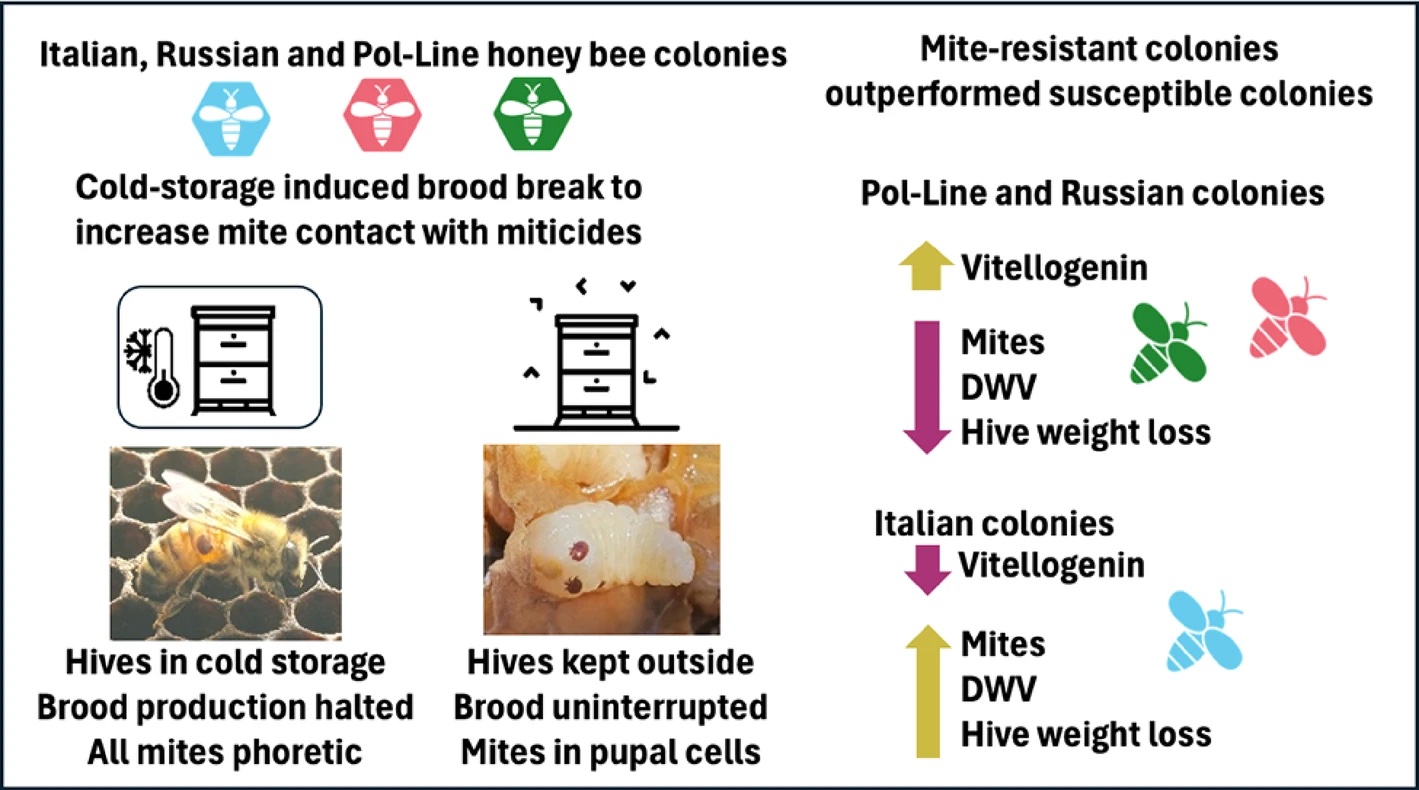
In a new study, colonies of genetically varroa-resistant bees were compared with colonies where artificial brood breaks were used as the control strategy.
The results are interesting.
The resistant bees had lower mite levels and a lower prevalence of Deformed Wing Virus (DWV).
In relevant comparisons, a reduction in varroa levels of over 65 percent was reported compared to control groups.
At the same time, the resistant colonies developed better.
This does not mean that all other varroa control methods have suddenly become obsolete. Resistance breeding is a long-term effort, and the results are influenced by genetics, local conditions, and how populations are managed.
However, the study points to a fundamentally important difference.
Treatment and brood breaks address the problem once it is already present in the colony.
Genetic resistance, instead, changes the relationship between the bee and the parasite.
If such traits can be broadly and stably established, breeding could therefore become an increasingly important part of a long-term sustainable varroa strategy.
Source: Scientific Reports (Nature).