The fight against honey adulteration has long relied on chemical and physical analyses.
Now, there's growing interest in an entirely different source of information: DNA present in honey.
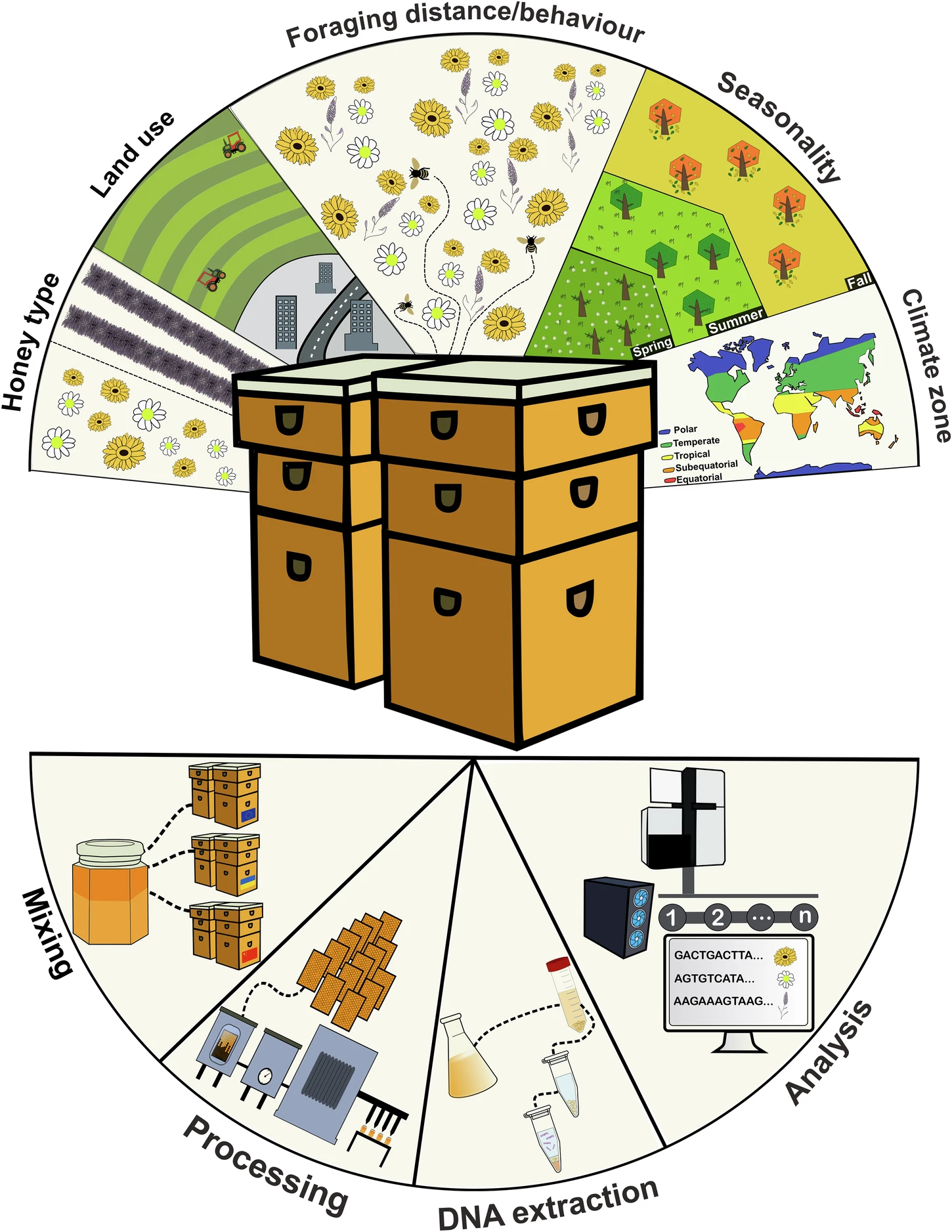
Honey contains biological material from, among other things, plants and other organisms in the environment where bees collected their nectar. With modern DNA sequencing, known as Next Generation Sequencing (NGS), parts of this biological signature can be analyzed.
This opens up interesting possibilities.
In principle, DNA information could help verify claims about, for example, botanical origin and, in some contexts, geographical origin.
However, the researchers behind a new study simultaneously emphasize that the field is still in a developmental phase.
For NGS to be used as a robust method for honey authenticity, standardized sampling and analysis methods, improved reference databases, and inter-laboratory validation are needed.
This is an important distinction.
The fact that an advanced analysis can detect DNA in honey does not automatically mean that the result can be used as definitive proof of where the honey was produced.
However, DNA can become an additional layer of information alongside chemical analyses, pollen analysis, documented traceability, and other control methods.
The development thus points towards something larger: future honey control will likely not rely on a single analysis method, but on combining several independent types of information.
Source: Of bees and buzz: towards validated NGS-based methods in honey authentication, npj Science of Food, April 2026.